• Blog
  • Product reviews
  • Nutrients
    • Magnesium findings
    • Algae
  • Memory Loss and Improving Memory

Treat for life

Live and let live

Pico Ionic Minerals

July 13, 2017 By Nemira Leave a Comment

Pico-ionic minerals are monoatomic, individual particles. Ions charged atoms. They tend to bond with hydrogen and oxygen, forming hydroxides and oxides. Pico is the term for size. There is one quadrillion or 1,000,000,000,000,000 picometers in a meter. Can you grasp it? I can, but it still confuses me because we do not deal with this type of size measurement in real life.

Can we ask to paint a flower the size of one picometer? We can ask, of course, but who will do it and how?

Pico-ionic minerals are so minor that they can go through a cell’s membrane. It helps the body absorb minerals in an efficient and fast way.

ReMag and ReMyte are picometer minerals


ReMag Review:The Best Way to Get Magnesium Benefits

ReMag and ReMyte are exceptional ionic solutions. How are they unique? ReMyte and ReMag are monoatomic, picometer solutions. Usually,  ions have a habit of bonding together, formin, clusters and more significant colonies or complexes. connect can bond with oxide and hydroxide, making magnesium oxides and hydroxides. These unions act as antacids neutralizing hydrochloric acid in the stomach. They have a laxative effect, are challenging to digest, and are not absorbed completely. The absorption can be from 4 percent for magnesium oxide to forty percent.

How are ReMag and ReMyte special?


Magnesium ions in ReMag and ions in ReMyte solutions do not bond with each other, thanks to the unique manufacturing practice. They do not make complexes as other ions do. What fascinates me is that the ions in these formulas are the same size as the periodic table.

Can you imagine that these ions in ReMag and ReMyte are the same size as minerals in the soil?  Plants get minerals from the ground using the root system. Minerals travel through tiny rootlets to the plant.

Minerals can not be more minor as created in nature. ReMag and ReMyte have pico-ionic minerals size of atoms in the periodic table. Nobody can make ions in an insignificant way. They are not divided further, and It is the end of the limit.

How do minerals reach the body?


The food travels from the mouth down to the stomach. Individuals who thoroughly chew food help saliva start the digestive process. In the stomach, hydrochloric acid releases minerals from food in the form of ions.

Digestive juices ionize minerals, creating individual ions. According to Dr.Carolyn Dean, “ions are the basis of biological energy and function.”

Later on, individual ions, freed from food, attach proteins to carriers. In this way, minerals are delivered to various places in the body.

What is the ion?


An ion is a negatively or positively charged atom. Cations are positively charged ions, and anions are negatively charged ions.

When the atom loses or gets an electron, it is electrically charged. To completely absorb minerals, they must have an electrical charge.

This electrical charge makes ions interact with others, attracting or repelling each other in a search for another ion.

How does electrical charge benefit the body?


Electrically charged minerals are starters, cofactors, and catalysts in the body’s metabolic processes. Cells in the body are surrounded by fluid, saturated with cations( positively charged ions) and anions(negatively charged ions). The liquid inside the cell is the same.

The electrical gradient formed thanks to the separation of atoms with specific electrical charges. Thanks to this current or electrical gradient, mineral ionic particles flow smoothly through the cell membrane.

Monoatomic ionic minerals in ReMag and ReMyte are absorbed quickly because of their small size and electric charge.

How small is small?


Minerals enter the cell through ion channels. These channels are 400-500 picometers in diameter — ion channels made from proteins that form pores through cell membranes.

I read that ReMag goes straight to the cell. When we drink water with ReMag, magnesium reaches cells already in the mouth. It does not have a laxative effect. The absorption is 100 percent.

I thought about how it could be because it is not easy to grasp that minerals in ReMag and ReMyte are so small. They are so tiny that they instantly go into the cell.

How does the body benefit from pico-ionic minerals?


The absorption of pico-ionic minerals saves plenty of energy for the body. Pico-ionic minerals are so small that they go straight to the cell. The digestion process is shortened. The body can perform more efficiently.

Disclaimer

Filed Under: Magnesium findings Tagged With: Dr. Carolyn Dean, ions, magnesium, monoatomic, pico-ionic, picometer, remag, remyte

Magnesium for Keto Diet

July 12, 2017 By Nemira Leave a Comment

Can you imagine what the Keto Diet was thirty years ago? It is like fashion, which comes and goes with the life flow. What is the Keto Diet? Keto Diet is high in fat and protein. Most of the protein foods are from the diary. Dairy products have plenty of calcium. Here, the Magnesium for Keto Diet comes into the picture.

Keto Diet is high in calcium and low in magnesium. When magnesium is deficient, calcium flows in the bloodstream because there is no magnesium to let calcium in the cell. The calcium builds up in soft tissues, creating pain and bumps.

Magnesium for Keto Diet

Keto practitioners experience muscle cramps and constipation. Keto Diet restricted carbs. You can get just five percent of carbs. According to Dr. Carolyn Dean, M.D., N.D., 5 percent of carbs in the Keto Diet can be one carrot.

The Keto Diet does not have fibers. You know that fibers help move food down the digestive tract. Where can you find threads in proteins and fats? Are you going to chew collagen?

The Keto Diet consists of 65 percent of fats, 35 percent of proteins, and five percent of carbs.

According to Timothy Ferriss, the author of Titan Tools, a ketonic diet erased all Lyme disease symptoms. After one year, when he tried the ketonic diet, symptoms did not return. Of course, he is happy with this outcome.

How does the Keto diet work?


The body uses fat and protein for fuel. Fat is stored, and the body burns fat from these stories and the food, too — ketones derived from fat — usually the glucose used for energy. Keto Diet skips carbohydrates. It means that the body will burn ketones from fat. This condition is called ketosis.

Timothy Ferriss mentions that individuals can reach the state of ketosis in various ways, such as fasting, exogenous ketones, diet, or a combination.

The Precision Xtra device by Abbot will show you if you are in a ketosis state. Beta-hydroxybutyrate(BHB) in blood and glucose levels need to be 0,5-1 mmol (millimolar).

Timothy Ferriss, the author of Tools of Titans, in his interview with  Dominic D’Agostino, the scientist and researcher, pointed out that the ketonic state increases the level of performance, increases strength, and burns fat.
Overall, I would recommend reading his book Tools of Titans, a valuable source of information, newest discoveries, and insights.

Ketones have an anti-inflammatory effect, too.

Keto Diet has 70-80 percent of calories coming from fat.  I wonder how many minerals and vitamins you can get from fat?

Conclusion


Magnesium for Keto Diet is vital because proteins and fats do not have as many minerals as green vegetables. Besides, we can not get enough magnesium from greens because the soil is depleted of minerals. It means that magnesium supplements could help avoid complications such as constipation, calcification, and muscle cramps.

Disclaimer

Filed Under: Magnesium findings Tagged With: fat, ketones, Magnesium for Keto Diet, proteins, Timothy Ferris

Magnesium Rocks Calcium No

July 11, 2017 By Nemira Leave a Comment

Magnesium rocks, calcium no. Yes, it is correct because if you never had a bump under the skin and sleepless nights thinking what the heck it is, count yourself as the lucky one. In this age where pink ribbons are everywhere, stories about people going to heaven from incurable diseases can scare everybody. How can you know that it is? My few friends had it, and they were threatened in the same way as I worried about them. I read that these bumps can be in any place where soft tissue is involved.

How do these bumps occur?


First, we need to clear out what the heck is these bumps under the skin. It is the calcification of soft tissues when calcium is abundant. Individuals take calcium in enormous amounts, fearing that bones will crumble, break, or weaken joints.

Unfortunately, calcium comes in forms which not dissolve in the blood. It means that it floats in blood. Depending on the size and quality, the calcium can be absorbed partially, or it will not be absorbed at all. Magnesium aids in dissolving calcium. When calcium enters the cell through calcium channels, magnesium controls how much calcium can go into the cell.

Magnesium and calcium correlation


According to Dr. Carolyn Dean, “magnesium in the cells is kept at a concentration 10000 greater than calcium. It allows only a certain amount of calcium to enter cells to create necessary electrical transmissions, and then immediately ejects the calcium once the work was done. Why? If calcium accumulates in the cell, it causes hyperexcitability and calcification, disrupting cell function and leading to angina, high blood pressure, arrhythmia, asthma, headaches and even heart attacks.”

Carolyn Dean, N.D., M.D.

Of course, it will be a placebo effect for us when they believe that we did everything to help our body stay active. Yes, I thought the same way until I found out that calcium from the worldwide company Tianshi is absorbed 70 percent. I did not see the lab results. It is a claim from distributors.

Let’s look at Dr. Carolyn Dean’s book The Magnesium Miracle.  Dr. Carolyn Dean explains why calcium is a bad guy without the presence of magnesium.

Heart problems


The heart is a muscle, a different one. However, it requires magnesium when individuals take too much calcium, and heart cells are overloaded with calcium. Cells contract and spasm. This spasm can be a life-threatening situation called a heart attack. Magnesium is a natural calcium channel blocker. Magnesium regulates calcium flow inside and out of cells. Sufficient magnesium lets cells relax and does not let calcium overflow heart cells.

According to Dr. Carolyn Dean, drugs such as diuretics deplete magnesium.

Muscle problems


Magnesium and calcium have close relationships. Magnesium relaxes cells. Calcium contracts muscle cells. Without magnesium, muscles can spasm. Cramps occur.

Magnesium Rocks Calcium Sucks

Athletes can suffer from lactic acid buildup when they do not use magnesium. Magnesium is lost during exercise with sweat and stress. An additional amount of magnesium is needed to keep muscles in shape and prevent lactic acid buildup.

Athletes can be tired if they do not get enough magnesium. Magnesium participates in energy utilization. The study with animals shows that animals who got magnesium recovered from tiredness.

The overdose of calcium


Individuals use plenty of calcium and consume fortified food and drinks with calcium. Without sufficient magnesium, calcium overflows cells. Calcium does not dissolve in the bloodstream without magnesium—the excess of calcium deposits in soft tissues. Bumps occur under the skin or in the breasts.

Problems with bones


According to Dr. Carolyn Dean, the author of  The Magnesium Miracle, the overdose of calcium with vitamin D can lead to bone loss when magnesium is deficient. There are some events involved that result in brittle bones.

Conclusion


Calcium without magnesium is a helpless mineral that does more harm. Sufficient magnesium helps the body stay on track and perform all functions. Magnesium rocks, calcium no.

Disclaimer

Filed Under: Magnesium findings Tagged With: bones, calcium, Dr. Carolyn Dean, heart, magnesium, muscles, supplements

Magnesium for Obesity

July 8, 2017 By Nemira Leave a Comment

Magnesium for obesity is a vital mineral. Sufficient magnesium can make a difference in people’s lives. Unfortunately, obese individuals lack magnesium.

How does it happen?


Magnesium for Obesity

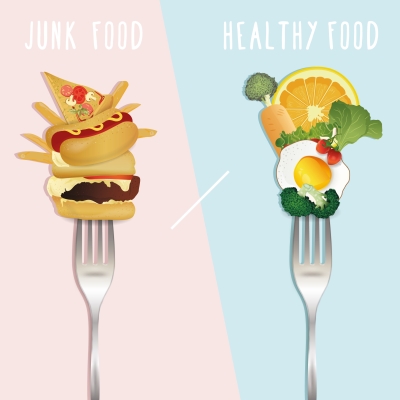
The Diet of fat people consists of fried foods, cakes, baked, and processed foods. Sugary drinks add weight to places where fat is undesirable. A diet without nutrients such as minerals, vitamins, enzymes, and amino acids is a junk diet. We eat food that depletes magnesium and other minerals. This food builds up fat but does not provide building blocks and materials for the body’s metabolism.

How does magnesium help with obesity?


Magnesium, together with vitamin B -complex, activates enzymes. These enzymes control

  • Digestion
  • Absorption
  • Utilization of proteins, fats, and carbohydrates.

What do you think if the body does not have enough magnesium? How are these enzymes supposed to work? It is the same as expecting a car to drive a hundred miles with a few ounces of gasoline.

Of course, the body and car are entirely different. However, some of us treat our collections like the mechanism, where one detail can be changed with others. Sorry, it does not work in this way.

I can imagine that people would like to solve all problems by pushing one button pill or buying lottery tickets. I know what it is: the lack of information.

Magnesium and vitamin B-complex are energy nutrients. When they are inefficient, the body can not properly utilize food. Obesity, hypoglycemia, and anxiety attacks can occur.

Why do people crave food?


Magnesium for Obesity

People reach for junk food again and again when the body misses vital nutrients. The body knows what it needs. However, they can not tell or ask us for help. When we torture our bodies with junk food, the body stops behaving and rewards us with additional pounds and various disorders. No fun, but that it can do? Empty calories from junk food build up weight for us, but the body craves nutrients again.

It is a vicious cycle when we do not give the body what it needs. The body, until organic, needs nutrients for functioning. We eat more and more.  Junk food does not have nutrients. Junk food is just a ballast, nothing more. Obesity takes over. We are not happy. Maybe happiness visits during the process of eating, but later on, it disappears.

The lack of magnesium leads to diabetes


Obese people have problems. These problems are limited movement, low self-esteem, the lack of cute clothes, a lousy attitude from strangers, etc.

Besides, diabetes can creep in. How does it happen?  Magnesium is friends with insulin. Magnesium lets insulin usher glucose into the cell. Imagine the situation when you want to go to prom with your girlfriend, but your parents do not permit you. You can be mad or stump feet, but you will not go.

Magnesium for Obesity

In this case, with magnesium, if there is not enough magnesium, glucose and insulin levels will become elevated. The excess glucose is stored as fat. Can you imagine?  When levels of insulin are too high, diabetes can occur.

When magnesium is efficient, can you see connections between junk food, magnesium, and consequences?

Of course, there are more factors, such as genetics and viruses( read Sylvia Tara, the Ph.D.  book  The Secret Life of Fat), but the lack of magnesium throws the body off balance.

Do not worry; be happy


I know what is easier to tell but not accomplish tasks, especially if it requires discipline. Obese people experience stress over time. The stress hormone cortisol suppresses the metabolism. The body wants to keep all fat just in case something happens. However, this shutdown does not let us lose pounds.

Is it a solution?


Yes, it is. First, magnesium makes miracles. This mineral relaxes enzymes to perform their job efficiently. In this way, the body can utilize food without adding it as fat. Sounds great? Everything is simple if we look for the correct information. Magnesium helps deal with stress, too.

There are plenty of magnesium supplements. Magnesium citrate is one of the best for looking for price and benefits.

However, ReMag, the liquid pick-ionic magnesium, gives the body everything it needs. ReMag is 100 percent absorbable. It goes straight to the cell. When I hold the ReMag solution in my mouth, magnesium travels directly to the body: no laxative effects, no additional parts, just pure magnesium. You can read more about ReMag here.

Disclaimer

Filed Under: Magnesium findings Tagged With: enzymes, magnesium, magnesium for obesity, nutrients, vitamin B complex

Magnesium for Eclampsia

July 6, 2017 By Nemira Leave a Comment

Magnesium for Eclampsia

Magnesium for eclampsia is vital. It must be written in all prominent places where pregnant moms, dads, and families go. Magnesium can make a difference in people’s lives.

What is eclampsia?


Eclampsia is a terrible condition that can cause premature labor, premature birth, and cerebral palsy in the newborn. Eclampsia causes at least 76,000 maternal losses every year worldwide. This situation develops fast and leaves miserable families and spouses without wives, moms, or babies.

I read about eclampsia in Dr.Carolyn Dean’s book The Miracle Magnesium. She explains everything so quickly about the reasons and consequences of eclampsia.

Magnesium helps with eclampsia, preventing seizures, and calming and relaxing the body.

Characteristics of preeclampsia


  • High blood pressure
  • Hyperactive reflexes
  • Edema
  • The protein in the urine
  • Changes in vision
  • Headaches

These symptoms can cause seizures. It is called eclampsia.

In the book The Magnesium Miracle, Dr. Carolyn Dean writes about the woman, Mary, who had the symptoms described above. Fortunately, the situation for Mary improved thanks to the knowledgeable midwife.

The midwife gave recommendations to get magnesium because Mary’s prenatal supplement contained just 150 mg of magnesium. Mary needed 360 mg of magnesium to keep up with RDA for pregnant women. The midwife recommended 400 mg of elemental magnesium.

After taking sufficient doses of magnesium, positive changes and improvement were detected. Mary had less back and neck tension, constipation gone, energy returned, and blood pressure lowered.

Her obstetrician recognized that awareness about magnesium levels for pregnant patients must be increased.

Heart-wrenching stories from NPR


National Public Radio is an enormous source of information and a great one. Any topics you would like to analyze, learn, and discover are presented on NPR.

Yesterday, I turned the radio on and heard the sad story about women who lost their lives. Pre-eclampsia happened to them. You can listen to this story here. It seems such a helpless and horrible experience to these families.

Magnesium for Eclampsia

Why do I want to share this story?


First, I was astonished to hear investigative stories from NPR. All NPR stories are extraordinary, but this resonated immensely. Why? I read Dr. Carolyn Dean’s book The Magnesium Miracle. She provides so much information about the importance of magnesium and how it works that I would give copies to everybody if I could. However,  I hope that somebody will listen to this story and tell others. The information, the right one, based on facts and scientific research, is a king.
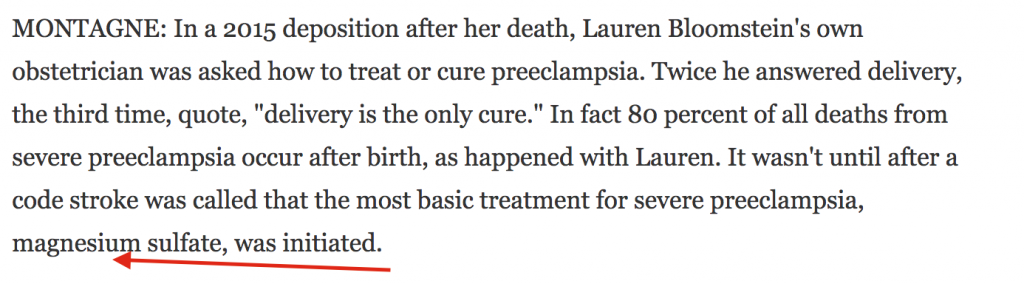

Second, I heard the magnesium sulfate, and it could not leave me just sitting here and being sorry for these tragedies.

I found this story and reread the transcript, and yes, magnesium is mentioned here as magnesium sulfate.

Here, you can see the excerpt from the whole transcript provided by NPR and ProPublica’s joint investigation.

Magnesium for Eclampsia

You can read or hear the entire story from NPR here. I wish that you would never experience a situation like this one. Magnesium is a pure mineral found in Earth’s crust. Our bodies do not produce magnesium. We must get it with food or drink. Unfortunately, individuals do not get enough magnesium to keep up with challenges in life from the diet.

Magnesium for eclampsia is essential as the missing mineral. Magnesium makes a difference in our lives.

Do you have more questions? Would you like to share your thoughts and learn more? You could read about magnesium by searching for Dr. Carolyn Dean, M.D., N.D.

Do you have experience with magnesium? I would be glad to know about it.

References: NPR,

Dr.Carolyn Dean, M.D., N.D.

Disclaimer

Filed Under: Magnesium findings Tagged With: Dr. Carolyn Dean, eclampsia, magnesium, magnesium sulfate, NPR, preclampsia, pregnancy

Why Are Fats Important to Our Diet

July 6, 2017 By Nemira Leave a Comment

Fats are vital for the maintenance of functions and activities in our body. Why are fats essential to our diet?

Fats provide energy, lubricate joints and intestines, and insulate the body. Vitamins K, D, A, and E require fats to solve. Our brain needs fat.

What is the fat?


Fats are the combination of glycerin and one or more fatty acids. Fatty acids are composed of oxygen, carbon, and hydrogen.

There are three types of fat


  • Thin oils such as vegetable oils. Sunflower oil, Rice bran oil, Walnut oil, and Olive oil.
  • Thick oils or heavy oils such as animal fats
  • So-called grease as processed fats in high temperatures

What do fats do?

Why Are Fats Important to Our Diet?

Fats are essential components of our cells. However, fats work best and efficiently when they are in a natural state. The heat removes all excellent properties from fat.

Importance of fats


  • Fats are carriers of vitamins A, D, E, and K. These vitamins are soluble in fat.
  • Fats are essential parts of cells and tissues in the body.
  • Fats lubricate the joints.
  • Natural fats act as the lubricant in the intestine, helping food move through the bowels.
  • Fat is the source of energy.
  • Adipose tissue is filled with cells of fat. Adipose insulates our body.
  • Fat is essential for the brain and cholesterol.

Why is natural fat the best?


Why Are Fats Imported to our Diet?

Overheated fats can not be emulsified. Proper digestion happens when fat is emulsified. When fat is processed or overheated created as a mixture of various chemicals, it loses value as nutrition, bringing vital components to our body.

Overheated fat can not move through the intestine and finally clogs it up. No fun, yes?

Natural fats such as cold-pressed oils are easily emulsified and get along with salad or raw vegetables. These healthy fats are digested without effort and harm to our bodies.

Overheated fats do not have any value to nutritional food. Our diet without natural fats is not fulfilled. We can not stay only on proteins or carbohydrates. The body needs all types of nutrients.

When we provide the right food unprocessed in excessive heat, the body gets all vital nutrients with enzymes, vitamins, and fatty acids.

Fat is crucial because it takes part in the body’s metabolism as a food reserve. Fat is the most concentrated and efficient fuel. Fats burn slowly and provide more energy compared with carbohydrates, which burn fast. It means that we can eat less fatty food than carbohydrates, which disappear after some time. Fat has a better burning efficiency and quality.

Pancreatic juice can process fat that is not overheated over 125 of Fahrenheit. In another case, fat can not be treated by pancreatic juice properly, and the liver can not use it.

Conclusion


Why are fats essential to our diet? Fat is vital for our bodies as a source of energy, material for lubrication, a source of fatty acids, and a tool for vitamins to work correctly in the fat-soluble environment.

Only cold-pressed and unheated fats bring nutritional value. The rest of the fat is the ballast and the total waste.

Do I know great products that bring balance and strength to our bodies? Yes, I know. You can read more about them here.

Disclaimer

Filed Under: Nutrients Tagged With: fat, fatty acids, natural fat, oil

The Magnesium Importance

July 4, 2017 By Nemira Leave a Comment

The magnesium importance is enormous. Magnesium deficiency is a common situation and brings unpleasant and harmful results to our bodies. The body does not produce magnesium. This mineral reaches us with diet. Unfortunately, plants and animals do not get magnesium from the soil in quantities beneficial for our well-being.

Magnesium participates in over 800 enzyme systems, helps with anxiety, panic attacks, relaxes muscles, participates in energy creation, supports the heart, and protects tissues and organs from unnecessary calcium overload.

What is magnesium?


Magnesium is a mineral found in Earth’s crust, eight by abundance. Our bodies have 4-6 tsp or 20-28 g or 2 oz of magnesium. Magnesium resides in nature with a joint account with other elements. Magnesium makes combinations with sulfur, carbon, with calcium.

  • Magnesium plus sulfur will be Epsom salts.
  • Magnesium with carbon will be magnesium carbonate.
  • Magnesium with calcium will be dolomite.

Magnesium is an alkaline mineral that neutralizes acids.

Why is magnesium so important?


Magnesium participates as the cofactor in enzyme reactions. Enzymes run the body’s metabolism. Without enzymes, our body would shut down.

Magnesium regulates calcium flow to the cell and out of the cell. The calcium does not know when to go to the cell and when to move out. Magnesium is smarter. This mineral pushes calcium into the cell when the cell needs it — magnesium ushers calcium out of the cell when the cell is content with the amount of calcium. Of course, the magnesium does not work as a doorman in the building. It is a complicated mechanism. However, everybody who wants to dig deeper into the details of the body’s metabolism can take chemistry and biology courses and check Dr. Carolyn Dean’s website: www.drcarolyndean.com.

Magnesium and calcium relationship


We need twice the amount of magnesium compared with calcium. Unfortunately, people think they will scatter to pieces without enormous amounts of calcium. They take supplements and eat food where calcium is a common component.

Interestingly, calcium does not dissolve in the bloodstream or water. You whisk calcium hundreds of times in the glass of water, but it still is visible as white flakes. Only magnesium can make calcium disappear.

Previously I wondered why some individuals have bumps under the skin. It is not painful, but it is a bump. Who needs it?

The short story is that calcium without sufficient magnesium deposits in tissues. Later on, we have problems with blood vessels, breast tissues, etc. Uh!

Magnesium for active individuals


The Magnesium Importance

Magnesium helps athletes and everybody who exercises. Magnesium relaxes muscles and helps prevent lactic acid build-up after a strenuous workout.

Calcium contracts muscles. Magnesium relaxes. Without sufficient magnesium, we would have cramps, twitches, migraines, headaches, anxiety, and depression. Tissues of muscles are everywhere in the body. It can be a tiny thread of muscle cells, but they require magnesium too.

Breathing with magnesium


Magnesium aids asthma patients. We have small muscles in the airways. When an asthma attack occurs, airways spasm and do not let air inside. It is a terrible situation. Magnesium participates in relaxing muscles and eases symptoms of asthma.

Love your heart


Magnesium is anti-inflammatory. Magnesium deficiency leads to various problems, such as autoimmune and heart disorders. Heart disease is one number of murders between men and women—steroids used for a long time prompt heart disease. Of course, genetics and lifestyle influence adverse outcomes, but the usage of magnesium can change situations immensely. Do not believe me? Please read Dr.Carolyn Dean’s book The Magnesium Miracle.

No to headaches


Previously, I knew that magnesium works because I experienced positive effects twenty years ago when one guy bothered me till I got a headache. It was just 20 20-minute conversation because we met accidentally and went in the same direction. I excused myself and visited a pharmacy. It was a nice coincidence because I got rid of this talker and have been introduced to the healing effects of magnesium. My headache disappeared after twenty minutes. It was magnesium citrate.

Okay, it is enough personal experience. Let’s check what Dr. Carolyn Dean mentions in her book, The Magnesium Miracle.

How about statins?


Yes, Magnesium is a natural statin. Magnesium aids the balance of enzyme that makes cholesterol. Can you imagine what happens when we do not get magnesium from food? From where can magnesium come? The best way is to get 100 percent of absorbed liquid magnesium.

Happy golden years with magnesium


Magnesium helps prevent aging consequences such as irritation, extreme emotions, dizziness, fatigue, headaches, the sensation of a lump in the throat, anxiety, and light-headedness. Most seniors do not get whole nutrition in the same way as adults.  Dr.Jean Durlach, a magnesium expert from France, pointed out that these previously mentioned symptoms happen when magnesium is deficient.

Do not worry; be happy


Depression touches millions of people. Chemicals used for relieving symptoms have plenty of side effects that can fill a long list. Okay, I am a veterinarian, and I know that prevention is the key to well-being. In China, the best doctor is a person who does not have such patients. How about it?

According to Dr. Carolyn Dean, studies reported that only 40 percent of antidepressants could work. Uh! Magnesium participates in serotonin release and uptake. You know that serotonin is a brain neurotransmitter that makes us feel good.

When stress depletes magnesium, depression can occur.

Conclusion


Magnesium is an essential mineral that is vital for body metabolism. Sufficient magnesium provides body support. The body functions and performs smoothly when it does not lack crucial minerals. However, we do not get enough magnesium with food. Most magnesium supplements have laxative effects. For some people, it is okay; for sensitive bodies, it can be a burden.

ReMag is a liquid magnesium formula that absorbs 100 percent and goes straight to the cell. There is no laxative effect. You can read about ReMag more here.

If you have some questions, please leave your comments below. I would be glad to answer.

Disclaimer

Filed Under: Magnesium findings Tagged With: aging, calcium, diabetes, Dr. Carolyn Dean, enzymes, heart, magnesium importance, remag

Weight Loss and Magnesium

July 2, 2017 By Nemira Leave a Comment

Weight Loss and Magnesium

Magnesium and weight loss benefit individuals who want to turn lives to the right. Conscious people search for ways to lose weight without drastic implementations. What do I mean?  Fasting, starving yourself till you faint, and sitting just on rice and apples do not help the body lose weight. Some pounds will be missed, but it will be back and more after a few months. How do I know? I read the book The Secret Life of Fat.  Here Dr.Sylvia Tara explains the cause of fat stubbornness.

Magnesium and B-complex vitamins serve as energy nutrients. They help activate enzymes that control digestion, absorption, and the utilization of fats, carbohydrates, and proteins.

Do we have choices?


Yes, we do. Weight loss and magnesium bring advantages to people who sincerely would like to explore mistakes and ways to lose weight. We will analyze why we become obese. Dr. Sylvia Tara points few reasons.

  • The lack of discipline
  • Lifestyle
  • Junk food
  • The absence of vital minerals, proteins, and vitamins
  • Genetics
  • Disorders

The right food provides all the beneficial nutrients. The weight will drop when we eat small portions and get up from the table, still feeling hungry. We can decide after twenty minutes if we ate enough because it takes time for the stomach and brain to communicate and signal to us that it is sufficient.

The weight loss will benefit us with increased self-esteem, saved money for clothes, and what is most importantly, we will feel lighter and more flexible.

How does magnesium help with weight loss?


Dr. Carolyn Dean describes magnesium as a weight-loss cure. She wrote about the importance of magnesium on the website Natural News.

The benefits of magnesium are:

  •  Magnesium helps digest food
  • Magnesium assists in the absorption and utilization of proteins, fats, and carbohydrates.
  • Magnesium aids with insulin, opening cell membranes for glucose.
  • Magnesium assists in preventing obesity genes from expressing themselves.
Weight Loss and Magnesium

The last topic is one of the fascinating statements from Dr. Carolyn Dean. Imagine that you have a family history of obese individuals. You try everything to lose weight, but somehow you struggle with it.

Taking magnesium supplements would help your body lose weight. How?  Magnesium and B-complex vitamins serve as energy nutrients. They help activate enzymes that control digestion, absorption, and the utilization of fats, carbohydrates, and proteins. The absence of magnesium and B vitamins leads to the incomplete use of food. Hypoglycemia, obesity, and anxiety occur.

Why do we crave food?


Our bodies feel when they lack vital nutrients. Processed, so-called junk food has empty calories. We do not get materials for the body to maintain essential functions. These calories from junk food add some unpleasant fat, but they do not provide any benefits.

The Krebs cycle requires magnesium. This mineral helps glucose during the six steps of the Krebs cycle to create energy. It means no magnesium, no power for us. What will we do? We ate more and lay on the couch, watching TV.

Deficient magnesium can not help insulin and glucose enter cells. The excess glucose will be stored as fat. We will become obese. Besides, too much glucose and insulin lead to diabetes.

Stress increases obesity


We can be stressed at any time. The lack of magnesium and B-complex vitamins does not help with fat. The stress hormone cortisol makes fat utilization difficult. The body has a habit, in this case, of storing all possible fat. Why? The body feels attacked. It can happen to anything. Some stress at home, at work, watching the news or just simply craving for the tenth donut. Magnesium has a calming and relaxing effect on us. Unfortunately, not so many people take magnesium supplements and know which formula is best.

Dr. Carolyn Dean describes one interesting experiment where mice were deprived of vitamin B. The mice became fat. After being given plenty of vitamin B, the mice stayed thin.

Conclusion


Weight loss and magnesium benefit individuals in various ways. These methods lead to well-being and balance. Sufficient magnesium makes miracles and is vital for the body. Weight loss will be possible when we get all the nutrients and carefully watch our habits. I always remember the story about the brave man who lost 525 pounds. You can read his story here.

You would ask if I know the perfect magnesium supplement, which is absorbed in 100 percent and goes straight to cells. Yes, I know. The name of the magnesium is ReMag. You can get more information about ReMag here.

Disclaimer

Filed Under: Magnesium findings Tagged With: magnesium, obesity, vitamin B complex, weight loss

Magnesium for Hypoglycemia

July 1, 2017 By Nemira 2 Comments

Magnesium for hypoglycemia is vital. Why? Magnesium helps balance blood sugar. When blood sugar drops, you have hypoglycemia.

Magnesium for hypoglycemia plays an important role 


The brain uses more blood sugar compared with other organs. Blood sugar can be low when individuals are malnourished, skip meals, or deplete the adrenal glands. Usually, adrenal glands release adrenaline to raise blood sugar when low. When adrenal glands are tired, no adrenaline goes into the blood.

Hypoglycemia occurs when blood sugar drops to a low 50mg/dl. The regular blood sugar is from 80 mg/dl to 100mg/dl.

Sufficient magnesium prevents low blood sugar. Balanced meals help too. It means that they will not experience symptoms of hypoglycemia.

Reasons for low blood sugar


Magnesium for Hypoglycemia

Individuals who eat refined products with plenty of white flour and sugar not just once in a while but consistently experience the effects of hypoglycemia. These foods are absorbed fast because they consist of carbohydrates. Carbohydrates burn fast and reach the bloodstream.

When carbohydrates reach the bloodstream, blood sugar becomes elevated. Insulin is released when blood sugar reaches the maximum. The excess glucose is ushered into the cells of the body. It prompts a blood sugar drop.

Sugar and insulin


When people eat more and more sugar, more insulin enters the bloodstream. Blood sugar falls again. This dropping of blood sugar in the bloodstream causes the release of adrenaline.

Usually, the adrenaline is released when our body is prepared to fight or run. I wonder where we can run after the piece of chocolate cake? Maybe to the next one, but these habits of consuming plenty of carbohydrates do not bring any good.

Adrenaline release can cause anxiety or panic attacks. In this case, individuals can reach for more comforting food. Unfortunately, it can make things worse.

Magnesium regulates blood sugar. Sufficient magnesium helps the body deal with the consequences of using a highly refined diet.

The danger of using aspartame


Aspartame is an excitotoxin. The use of products that contain Aspartame can lead to migraines and headaches. Aspartame is a sugar substitute. Unfortunately, this excitotoxin causes damage to individual neurons in the brain.

Neuroscientists and neurosurgeons recognize the harmful role of excitotoxin. These substances help develop neurological diseases such as Alzheimer’s, Parkinson’s, Huntington’s, and amyotrophic lateral sclerosis(ALS).

One of the components of Aspartame is aspartate, an active amino acid. The aspartate, together with glutamate, acts as neurotransmitters in the brain in minimal quantities.

Magnesium for hypoglycemia

Unfortunately, glutamate is used in MSG, a typical flavor enhancer in processed foods.

Think about shelving life for the product. The product can stay longer; the manufacturers do not need to deal with expenses when the item is spoiled quickly. Some of the products can stay thanks to preservatives forever.

Aspartate and glutamate are used as food additives in bulk. High concentrations of these essential amino acids continuously stimulate cells. Finally, cells are tired from challenges and undergo the process of cell death. This process is called excitotoxicity. It sounds terrible, but cells die from excitement.

Magnesium protects from harmful toxins


Magnesium is neuroprotectant. This mineral defends cells from neurotoxins. How does magnesium it?  Magnesium is the cofactor for more than 325 enzyme systems. These enzymes participate in detoxification, energy production, and brain and nerve protection.

Conclusion


Magnesium is an essential mineral and vital one. Magnesium for hypoglycemia helps ease the effects of processed and refined food. Magnesium influences the balance of blood sugar in the bloodstream. Adrenal glands rely on magnesium too.

With plenty of magnesium and balanced meals, we can avoid headaches, mood disorders, premenstrual tension, and attention deficit hyperactivity disorder. Magnesium supports the brain and its functions. It lets us avoid chemicals used to alter the mind when these disorders occur.

There are plenty of magnesium supplements. However, magnesium works best when absorbed 100 percent and does not have side effects such as laxatives. Would you like to check pico-ionic, 100% drank liquid magnesium? You can read the review here.

If you have comments or questions, please leave them below. I would be glad to answer as soon as possible.

Disclaimer

Filed Under: Magnesium findings Tagged With: adrenal glands, adrenaline, aspartame, brain, carbohydrates, hypoglycemia, magnesium, refined diet, sugar

Magnesium for Alzheimer

June 24, 2017 By Nemira Leave a Comment

Magnesium For Alzheimer

Magnesium for Alzheimer’s is an essential mineral. Magnesium is vital for Parkinson too. Half of the population over eighty-five is affected by Alzheimer’s in the USA. Numbers are staggering. Alzheimer’s messes with one’s life, putting a burden on families and society.

Unfortunately, just the autopsy can reveal Alzheimer’s disease. Tangles and plaques damage nerve fibers. Most affected places are in the hippocampal area and the cerebral cortex.

What could cause Alzheimer’s?


In her book, The Magnesium Miracle, Dr. Carolyn Dean, M.D., N.D., mentions Doctor Abraham Hoffner and Linus Pauling. They assumed that the reasons why dementia occurs are dehydration, cerebral allergies to chemicals or foods, and some drugs.

Aluminum and mercury are bad guys that trigger the birth of Alzheimer’s. I read many years ago that aluminum pots are dangerous. However, I see plenty of people use aluminum foil for baking.

Dr.Boyd Haley, the professor of chemistry and chair of the department at the University of Kentucky, found out that tangles and plaques in the brain affected by Alzheimer’s are identical to the brain damage caused by mercury. It is a great discovery, but it is a scary one from another side.

Without decent magnesium, cell saturated with calcium dies. Not only one cell but millions of them suffer and die. It has been found that Alzheimer’s patients have low magnesium

How do these chemicals reach us?


The mercury comes into the brain from dental amalgams, flu shots, or fish containing heavy chemicals.

Aluminum damages the brain using aluminum pots, cans, aluminum-containing antacids and antiperspirants, tap water, and aluminum foil. It is terrible because people busy with their lives do not have time to research the impact of heavy metals.

Aluminum is the nasty guy. Why? Aluminum can replace magnesium in particular enzyme systems. Aluminum and magnesium are different from black and white. Unfortunately, this action causes damage.

Magnesium for Alzheimer’s is vital one


Aluminum can replace magnesium in the brain. In this case, calcium channels are left open, and calcium is welcome to the cell. It happens because no magnesium regulates calcium to flow into cells. The cell saturated with calcium dies. Not only one cell but millions of them suffer and die. It has been found that Alzheimer’s patients have low magnesium.

Why do we need these problems?


Why do people not take magnesium to protect themselves from these horrible conditions? It is natural to have relief and escape from these problems. Just taking magnesium supplements, we can live meaningful lives. Most importantly, humans could have their dignity until the end. Who wants to forget family and surroundings?

Dr. Carolyn Dean mentions William Grant, an atmospheric scientist with a family history of Alzheimer’s. He knew that acid rain made trees age prematurely and assumed that people with Alzheimer’s have diets high in acid.  Besides, William Grant found out that individuals with Alzheimer’s have elevated aluminum, iron, and zinc levels. Magnesium,  calcium, and potassium are alkali metals. However, people lack them when they have Alzheimer’s disease.

Most people eat acidic food. Plenty of proteins from meat, sugar, and fat create an acidic environment in the body.

Conclusion


Magnesium could help immensely individuals with neurological diseases. Magnesium for Alzheimer’s is an essential mineral because it opens receptors in the brain to information. Magnesium controls calcium from overflooding brain nerve cells.

Besides that, magnesium relaxes muscles and calms down the whole body. People can sleep better. The rest is essential for the brain. During the time of sleep, the brain rejuvenates itself. Without proper sleep, we could lose the ability to think and act clearly.

There are plenty of magnesium supplements on the market. If you would like to read more about one of the best magnesium formulas, please read here.

How about you? Do you use magnesium? Did you meet people with Alzheimer’s? What do you think about ways to improve the well-being of loved ones? I would accept any opinion because it is a vitally important topic about magnesium for Alzheimer’s.

Disclaimer

Filed Under: Magnesium findings Tagged With: aluminum, calcium, magnesium, Magnesium for Alzheimer, mercury

  • « Previous Page
  • 1
  • …
  • 10
  • 11
  • 12
  • 13
  • 14
  • …
  • 17
  • Next Page »

Recent posts

  • How to Improve Visual Memory?
  • “Shocking Breakthrough: A Revolutionary Cure for Cancer Finally Discovered!”
  • Unveiling the Secret Superfood, That Will Transform Your Health!”
  • Nanoparticles Versus Picometers
  • Can You Survive on Spirulina Alone?

About Nemira

Hi, welcome to the Treat For Life. I am veterinarian, avid book reader, optimist and traveler. My motto is Live and Let Live. Read More…

Categories

  • Disclaimers
  • Privacy policy
  • Medical Disclaimer
  • Blog’s Disclaimer
  • Affiliate & Earnings Disclaimer
  • Dr.J.Mercola presents Dr. Sucharit Bhakti

Copyright © 2026Treatforlife.com